
Why Your Horse’s Vaccines Should Be Administered by Your Veterinarian
As the seasons change and fall settles in, it’s time to start thinking about your horse’s fall vaccinations. Vaccination is one of the most important tools we have to protect horses from serious infectious diseases, but choosing the right vaccines and making sure they are administered properly is just as important as remembering to schedule them.
While it may be tempting to purchase vaccines from a farm store and administer them yourself, there are several key reasons to schedule your horse’s vaccinations through your veterinarian.
Vet administered vaccines can provide additional protection
When vaccines are purchased and administered through a veterinarian, they are covered by important manufacturer guarantees and equine insurance coverage, depending on the vaccine and policy. For example, if a horse experiences a vaccine reaction after a veterinarian-administered vaccine, the manufacturer may have a support team to provide guidance and support. Some vaccine programs may even provide financial assistance for qualifying reactions. Likewise, vaccine manufacturers such as Zoetis offer programs that may help cover certain diagnostic and treatment expenses if a properly-vaccinated horse develops a disease despite vaccination, a rare occurrence known as a break of coverage. The exact terms and eligibility requirements vary by manufacturer and vaccine, so talk with your veterinarian about what protections may apply to your horse.
Your vet is there if your horse has a reaction
Although serious vaccine reactions are uncommon, anaphylaxis is always a medical emergency! Having your veterinarian present when vaccines are administered means that if your horse experiences a severe reaction, immediate treatment can begin. This can be especially important because anaphylactic reactions can progress rapidly.
Your veterinarian can also use information about your horse’s previous reaction to develop a plan for future vaccinations. This may include modifying the vaccine schedule, selecting appropriate vaccines, and using medications or other precautions when indicated, all while maintaining appropriate protection against disease.
Vaccination isn’t one-size-fits-all
Not every horse needs the exact same vaccines.
Some vaccines are considered appropriate for virtually all horses, while others are risk-based and depend on factors such as geographic location, travel, competition, boarding arrangements, age, and lifestyle. Your veterinarian can help you determine which diseases pose a meaningful risk to your individual horse. They also stay informed about disease activity and outbreaks in your region, allowing your horse’s vaccination program to be adjusted as circumstances change. It can even save you money, since the goal isn’t simply to give every available vaccine, but to create a thoughtful, tailored vaccination plan based on your horse’s individual risk.
Proper vaccine storage matters
Vaccines are biological products that require careful handling. Maintaining the appropriate temperature from the time a vaccine leaves the manufacturer until it is administered is critical to preserving its effectiveness. Veterinary practices have established protocols for proper storage, handling, and temperature monitoring. Unfortunately, you can’t always know how a vaccine has been stored when purchasing from an over-the-counter source like a farm or feed store. A vaccine that has been improperly stored may not provide the protection you expected, even if the vaccine itself has not expired. When you have your veterinarian administer the vaccine, you can have greater confidence that the product has been stored and handled appropriately.
Preventative care helps establish a relationship with your veterinary team
There’s another benefit to scheduling routine vaccination and preventative care visits: it helps your veterinarian get to know your horse before an emergency happens.
During routine visits, your vet can become familiar with your horse’s normal health, medical history, vaccination needs, and any ongoing concerns. That ongoing relationship better equips your vet to handle something unexpected – and when dealing with horses, it’s usually not if but when!
At BEVS, establishing routine preventative care qualifies you for 24/7 emergency services.
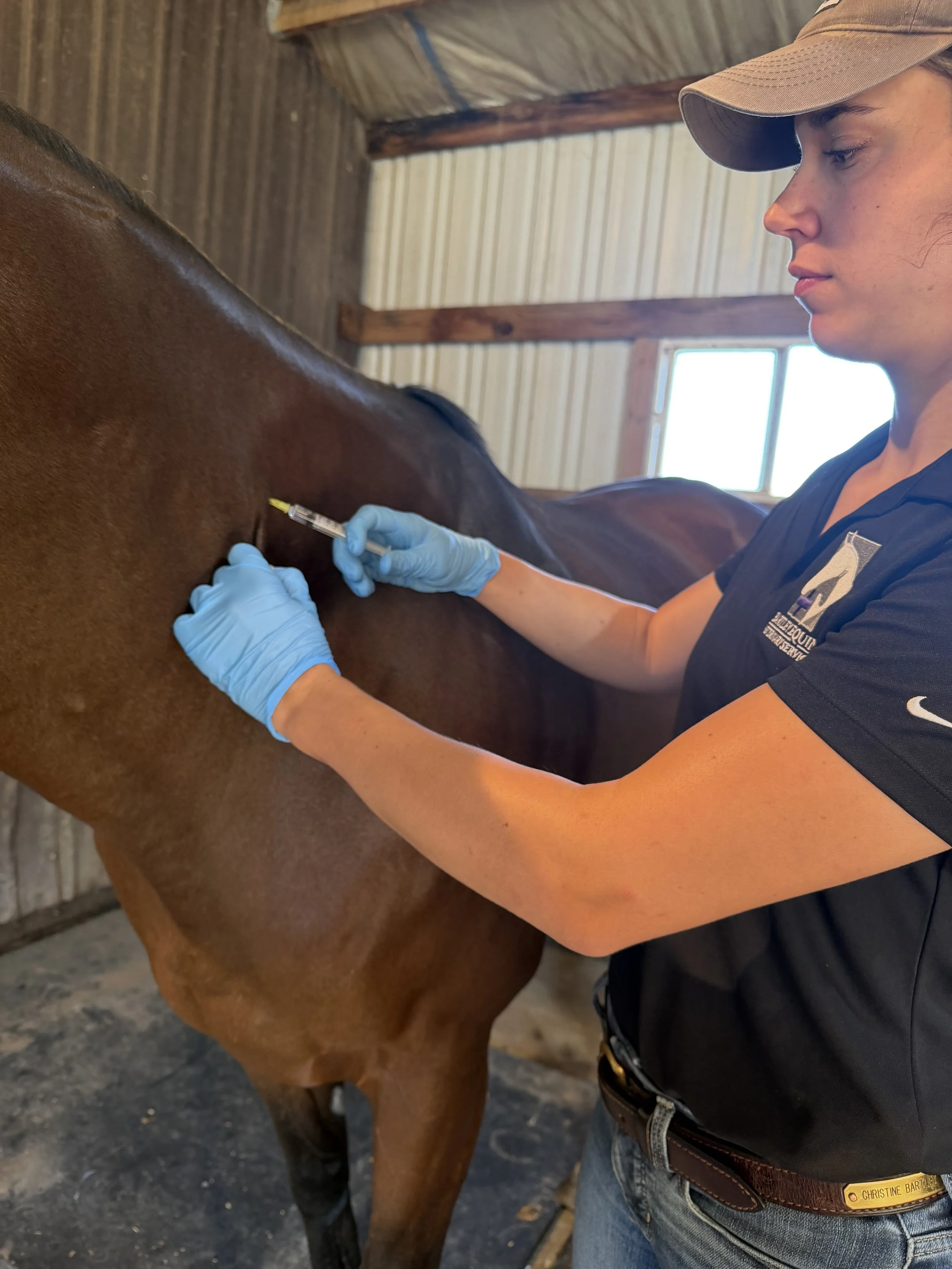
Make a plan this fall!
Vaccination is an important part of keeping your horse healthy, but the best vaccination is one that is individualized, properly administered, and regularly reviewed by your veterinarian.
As you make your fall to-do list, don’t forget to schedule your horse’s vaccine appointment! Your veterinarian can help determine which boosters your horse may need, discuss disease risks in your area, and make sure vaccines are stored, prepared, and administered properly. A few minutes spent planning preventative care now can make a big difference in protecting your horse throughout the year.
If your horse is due for fall vaccines, give BEVS a call to schedule an appointment!
Written and reviewed by Christine Bartley, DVM. Dr. Bartley operates an equine veterinary practice in Burlington, Kentucky serving Northern Kentucky and Greater Cincinnati. Learn more and meet Dr. B.